
Genovia: exosomes without the cold chain.
Adipose-derived stem cell exosomes for topical aesthetic use: roughly 2 billion per mL, freeze-dried at −80 °C and shipped dry.
A different company, a different category and a different regulatory posture to the therapeutic biologics on our biologics page.
- Category
- Topical cosmetic preparation. Approximately 2 billion adipose-derived stem cell exosomes per mL, used topically and never injected.
- Manufacturer
- BioGenomics. Genovia is manufactured by BioGenomics; Eventide is a distributor, not the manufacturer.
- Regulatory
- Genovia is manufactured by BioGenomics in a facility the company states complies with FDA, KFDA and GMP standards. A facility standard describes how the product is made, and is not an FDA approval of the product itself.
- What it costs
- Quoted per order. Product documentation and certificates are supplied with each order. Ask and we will send a sample set before you commit.
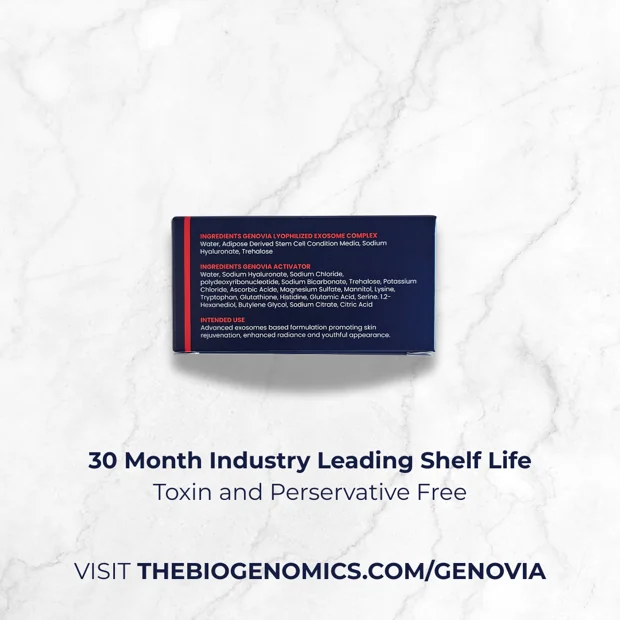
Genovia and ZEO are two different lines, and the difference is what lets you carry both
Both lines are exosome products and both come through Eventide, but they are made by different companies for different purposes, and they sit in different regulatory categories. We tell you which line your protocol needs before you order either.
Practices with a topical procedure menu
- You already run microneedling, RF microneedling, laser resurfacing or other post-procedure protocols and want a topical to pair with them.
- You want one exosome line you can carry in all 50 states, with none of the state-by-state limits the injectable lines carry.
- You do not want a freezer, a cold-chain courier or a shipping window in the treatment room.
- Your medical director wants product documentation and certificates in hand before the first order.
What a topical cosmetic preparation is
- Topical only: not injected. A protocol that calls for an injectable exosome belongs to the other line: a different manufacturer, product and regulatory category, with its own state rules.
- It is a topical cosmetic preparation, not a drug, and we give you the wording with your quote pack.
- The published record is in-vitro: six laboratory figures in cell and tissue models, reproduced in full on this page so you can read them yourself.
- The manufacturer states the facility meets FDA, KFDA and GMP standards; that is a manufacturing standard, not an FDA approval of the product.
That legibility is the appeal: a topical cosmetic preparation sits outside the state-by-state gating that governs the injectable line, ships to all 50 states, and can be described accurately in a single sentence every time.
Four questions worth asking us
- Which documentation and certificates come with the order, and can I see a sample set first?
- What does the facility standards statement cover?
- Which of the in-vitro figures relate to the procedures I already run?
- What does a vial cost at the volume one treatment room will use in a month?
How the yield problem gets solved
Only about 0.1% of stem cell culture media is exosomes, so producing them at concentration usually means repeatedly subculturing large volumes of cells, and every passage degrades the cells and the exosomes they make.
- Exosome load
- Approximately 2 billion exosomes per mL, in a vial.
- Source
- Adipose-derived stem cells.
- Stabilisers
- Sodium hyaluronate and trehalose.
- Drying and storage
- Cryogenically freeze-dried at −80 °C, so it ships and stores without a cold chain.
- Route
- Topical only: not injected. Providers use it alongside microneedling, RF microneedling, laser resurfacing and other post-procedure protocols.
A natural stimulant, not more passages
Step oneA patented culture step uses a natural stimulant that the manufacturer cites as raising exosome secretion more than fourfold, which keeps passage numbers low and cell health high.
Filtration and characterisation
Step two0.2 µm precision filtration, then nanoparticle tracking analysis and immunoblotting to characterise what is actually in the vial.
Freeze-dried at −80 °C
Step threeCryogenic freeze-drying with sodium hyaluronate and trehalose as stabilisers: which is why it ships and stores without refrigeration.
What is in the vesicle
Step fourExosomes are 30 to 150 nm vesicles carrying RNA, proteins and lipids, including growth factors, mRNA and miRNA.
| What differs | Genovia by BioGenomics | ZEO ScientifiX |
|---|---|---|
| Category | Topical cosmetic preparation | Perinatal and autologous biologics |
| Route | Topical only — not injected | Therapeutic protocols where a state statute covers the format |
| Source | Adipose-derived stem cells | Umbilical cord, amniotic, autologous platelets |
| Where it fits | Microneedling, RF, laser, post-procedure | Orthopedic, pain and wound care in Florida; scope-of-practice use in Utah, Georgia and Tennessee |
| Storage | Freeze-dried, no cold chain | Cryopreserved and lyophilised formats |
| Availability | All 50 states | Cell & tissue: FL, UT, GA and TN (FL: live-cell lots). Exosomes: TN, whose law names them. We confirm supply before we quote. |
The manufacturer's in-vitro testing
These are in-vitro laboratory studies in cell and tissue models, published by BioGenomics and reproduced here in full so you can evaluate the data yourself.
| Source | What it says |
|---|---|
| Manufacturer in-vitro studies | Six laboratory figures published by BioGenomics, reproduced in full below: skin penetration, human dermal fibroblast proliferation, elastin retention under SDS stress, pro-collagen and fibronectin activity, keratinocyte aggregation and dermal papilla markers. |
| Patented culture step | A patented culture step uses a natural stimulant that the manufacturer cites as raising exosome secretion more than fourfold, which keeps passage numbers low and cell health high. |
| Filtration and characterisation | 0.2 µm precision filtration, then nanoparticle tracking analysis and immunoblotting to characterise what is actually in the vial. |
| Manufacturing facility | Genovia is manufactured by BioGenomics in a facility the company states complies with FDA, KFDA and GMP standards. A facility standard describes how the product is made, and is not an FDA approval or clearance of the product itself. |
The six figures below are the manufacturer's own, reproduced in full so you can read them yourself rather than take a summary of them. No patient outcome is claimed or guaranteed.
What pathway a topical cosmetic preparation is actually on
Genovia’s category is its own pathway with its own rulebook, and that rulebook has been rewritten more recently than most of this industry has noticed.
- A cosmetic pathway, by design
- Under the FD&C Act, cosmetic products and ingredients, with the exception of colour additives, require no FDA approval before they go on the market. That is the statute working as written.
- MoCRA built the structure that was missing
- The Modernization of Cosmetics Regulation Act of 2022 (P.L. 117-328) is the largest expansion of cosmetics oversight since 1938. Facilities register, products are listed, safety substantiation must be kept on file, serious adverse events must be reported, and the FDA now holds mandatory recall authority. Registration and listing are a pathway, not a credential, described by the FDA as “neither a cosmetic approval program nor a promotional tool.”
- Intended use is what decides the category
- Whether a topical is a cosmetic or a drug is settled by intended use, which the FDA establishes from the claims made on the label, in advertising, on a website and in social posts. A product does not become a drug because of what is in it; it becomes a drug because of what is said about it. Appearance is a cosmetic claim, which is the language this product is described in, and we give you the wording for it. Repair, regeneration, healing and inflammation are not cosmetic claims, and a single caption can move a product from one category to the other for everyone selling it.
- Where this leaves an operator
- It leaves you with a product you can put on the menu in all fifty states, describe accurately in one sentence, and defend without a lawyer in the room: provided the sentence stays about appearance. Practices building around regenerative, longevity and performance medicine are getting more room to work in every year; the discipline of saying exactly what a product is, and nothing more, is what keeps that room open.
Sources for this section: FD&C Act §§201(g) and 201(i); FDA, Is It a Cosmetic, a Drug, or Both? (Or Is It Soap?); FDA, Modernization of Cosmetics Regulation Act of 2022. Read as of 7 August 2026 and reviewed on the 90-day compliance interval. General regulatory information for licensed providers, not legal advice.
Enhanced skin penetration
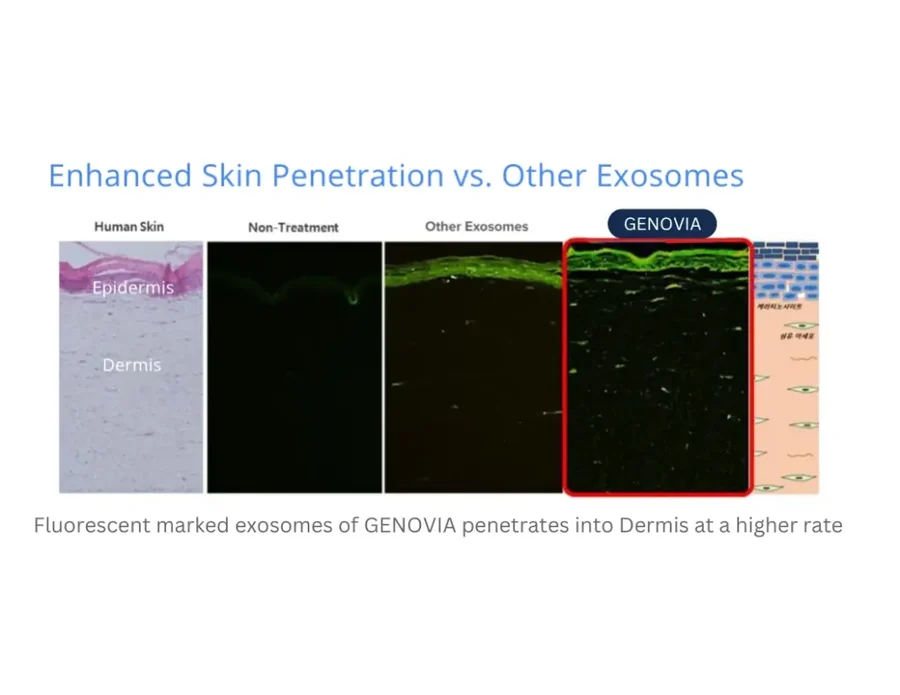
Fluorescent-marked Genovia exosomes shown penetrating into the dermis at a higher rate than the comparator exosomes in the same test.
Human dermal fibroblast proliferation
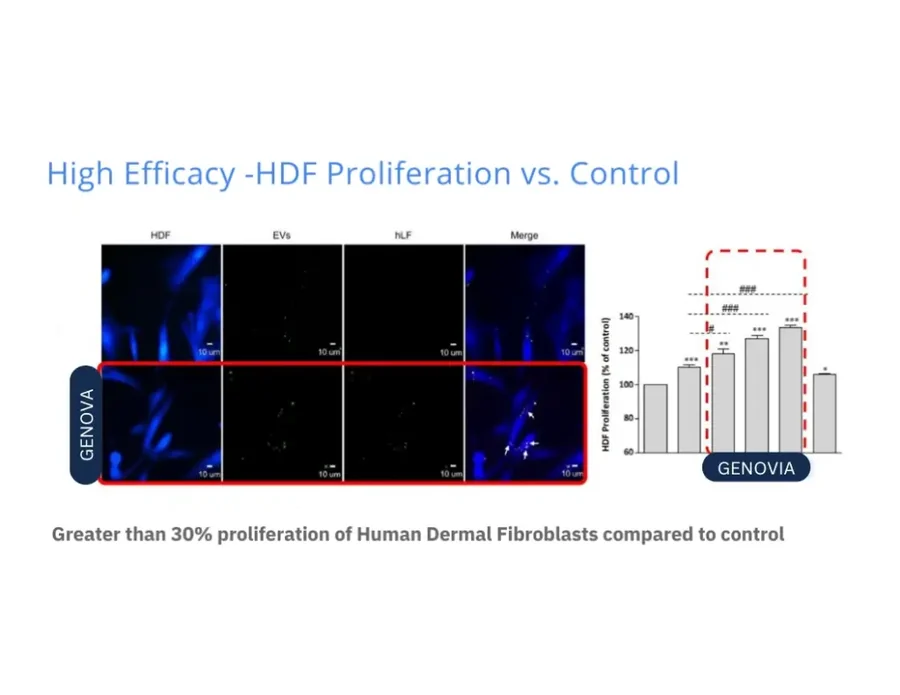
Greater than 30% proliferation of human dermal fibroblasts compared with control, and compared against vitamin C and empty exosome particles.
Skin elastin retention
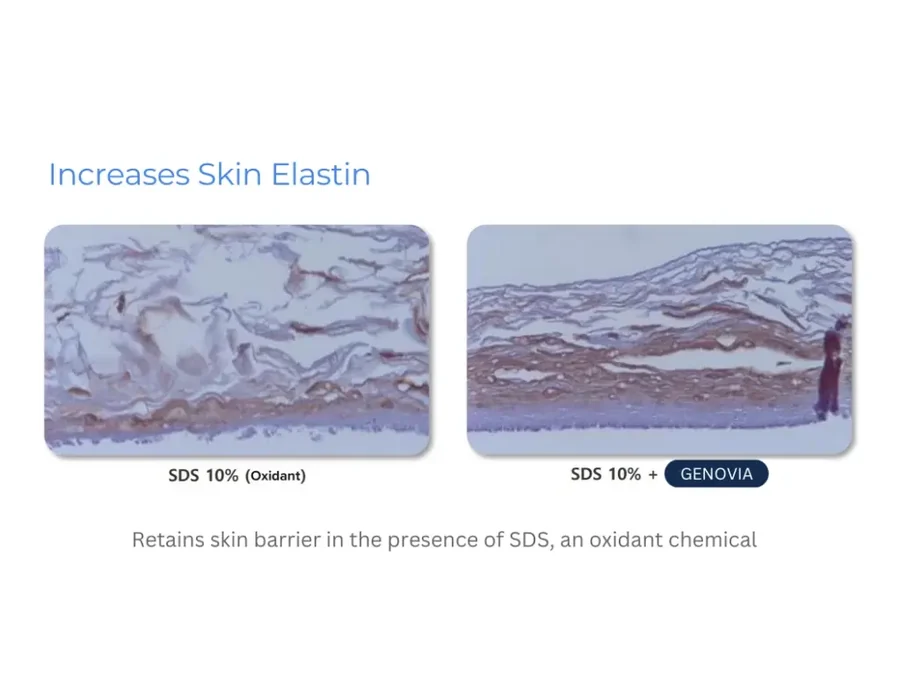
Retention of the skin barrier in the presence of SDS, a detergent used to stress the barrier in vitro.
Regeneration and elasticity
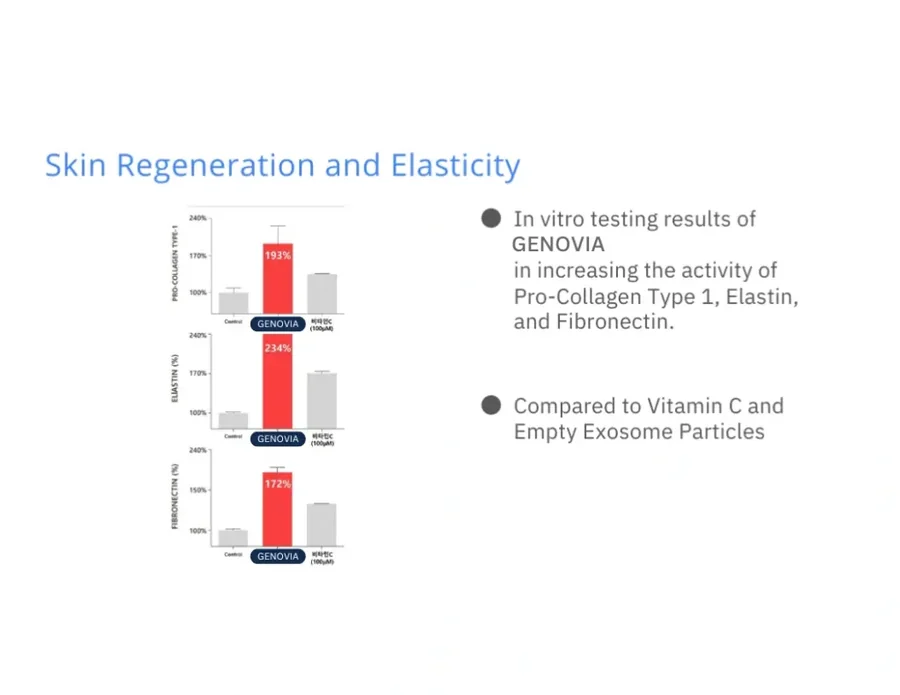
In vitro testing of Genovia's effect on the activity of pro-collagen type I, elastin and fibronectin.
Barrier strengthening and moisturising
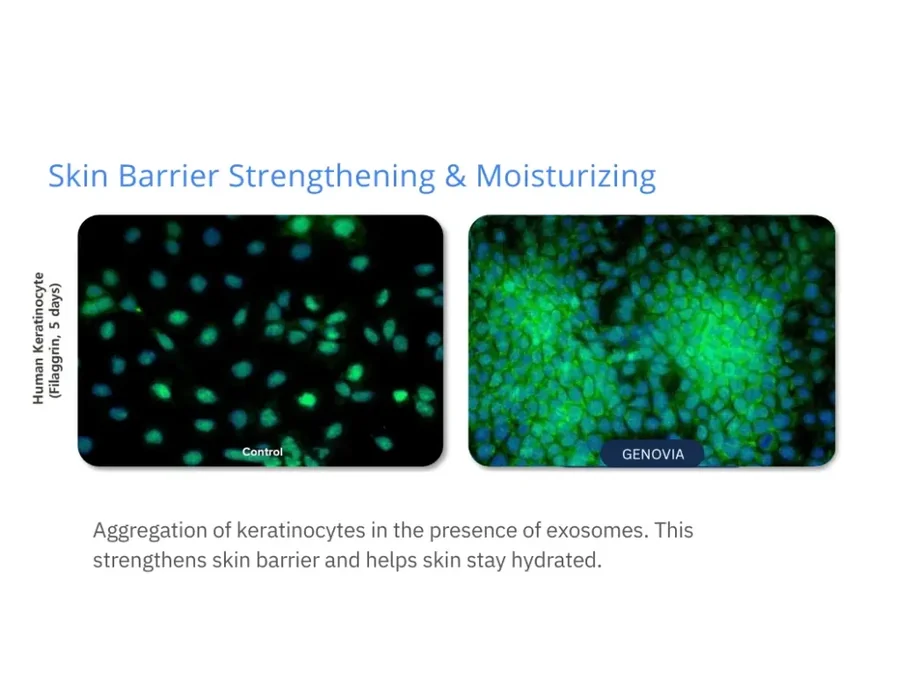
Aggregation of keratinocytes in the presence of exosomes, which strengthens the skin barrier and helps skin stay hydrated.
Dermal papilla and hair-cycle markers
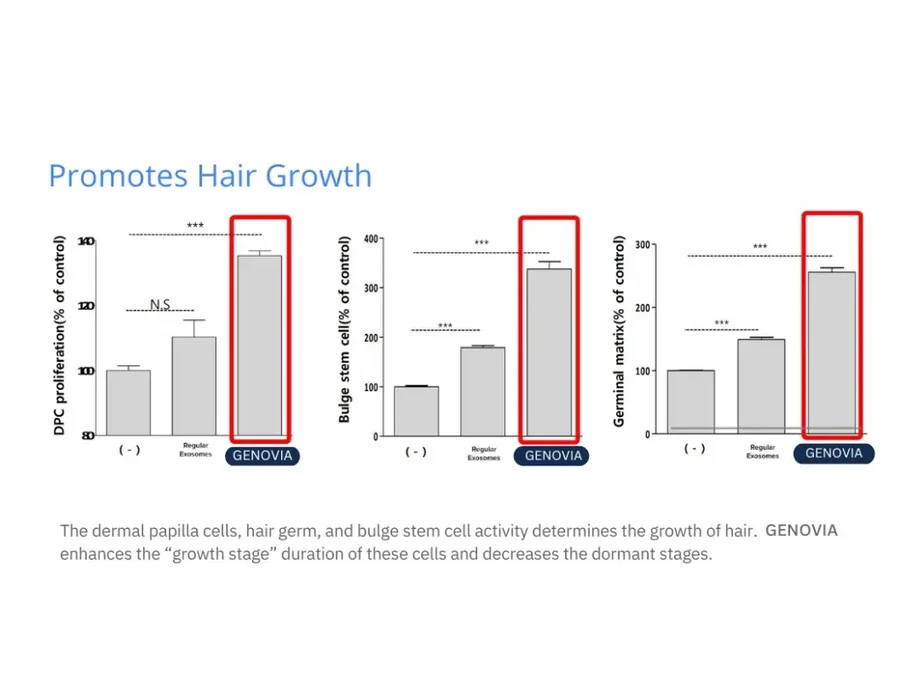
Dermal papilla cells, hair germ and bulge stem-cell activity, which determine the growth stage of hair.
Buying Genovia in the US
Genovia is manufactured by BioGenomics in a facility the company states complies with FDA, KFDA and GMP standards. Eventide Aesthetics & Wellness supplies it to licensed providers and practice owners.
we are the distributor here, not the manufacturer.
- A US distributor, not the manufacturer
- We handle supply, documentation and support. Manufacturing, testing and product specifications are BioGenomics'.
- All 50 states
- Topical cosmetic supply is not subject to the state restrictions that apply to the therapeutic biologics lines. Closest, in-person coverage across the Southeast.
- Licensed providers and practice owners
- Business-to-business only. Nothing on this page is directed to patients.
- Documentation with every order
- Product documentation and certificates are supplied with each order. Ask and we will send a sample set before you commit.
What providers ask about Genovia
What is Genovia?
A topical exosome preparation from BioGenomics, made from adipose-derived stem cells. Each vial carries approximately 2 billion exosomes per mL, stabilised with sodium hyaluronate and trehalose and cryogenically freeze-dried at −80 °C, so it ships and stores without a cold chain.
Is Genovia the same company as ZEO ScientifiX?
No. Genovia is made by BioGenomics and is a topical cosmetic preparation for aesthetic use. ZEO ScientifiX is a separate company supplying perinatal and autologous biologics for therapeutic protocols where a state statute covers them. Eventide supplies both, but they are different manufacturers, different products and different regulatory categories.
How is Genovia used in a clinic?
Providers use it topically, typically alongside microneedling, RF microneedling, laser resurfacing and other post-procedure protocols. It is a topical cosmetic preparation; it is not injected and is not intended to treat disease.
Who supplies Genovia in the United States?
Eventide Aesthetics & Wellness supplies Genovia to licensed providers and practice owners across all 50 US states, with closest coverage across the Southeast. Genovia is manufactured by BioGenomics; Eventide is a distributor, not the manufacturer.
Reviewed 24 July 2026 by Justin Messner, Co-Founder, Eventide Aesthetics & Wellness.
Important information for licensed providers. Genovia is a topical cosmetic preparation. It is not FDA-approved, it is not a drug, and it is not intended to diagnose, treat, cure or prevent any disease or condition, including hair loss. The figures above are the manufacturer's in-vitro results in cell and tissue models. No patient outcome is claimed or guaranteed. For licensed medical providers and practice owners; not directed to patients.