
Platinum Threads: a lift line, no capital required.
A full absorbable-suture range in PDO and longer-lasting PCL, with no capital equipment required, for licensed providers and practice owners.
- Format
- Absorbable PDO and PCL sutures: mono, cog, fishbone cog, screw, twin screw, mesh, multi and eye. A consumable, not capital equipment.
- Manufacturer
- Platinum Threads USA. Eventide is a United States distributor, not the manufacturer.
- Regulatory
- 510(k) status is held by line, not by family: documentation is held for the MONO PDO line and the barbed 4D and 6D COG PDO lines. Absorbable-suture clearances (soft-tissue approximation); lifting is provider technique. PCL-line documentation is under verification. Status is not uniform across every geometry and polymer in the catalog.
- What it costs
- Priced per pack, not as capital equipment: typically 5 pieces per pouch and 25 pieces per foil bag. There is no device to finance.
The lowest-capital line in the catalog
Nothing here is financed, because there is nothing to finance. With no capital question to answer, the one thing we settle per line is the regulatory documentation: 510(k) status is held by line, not by family, and we supply the letter covering the exact SKU you plan to use.
no capital equipment, no install: the lowest-capital way we know to add a lift line.
Practices adding a lift line to an injectable room
- You want a lift service without buying a machine: no lease, no financing, no idle capital.
- You already inject. The range slots into an existing injectable workflow from the first order.
- Your technique needs both diffuse support and a directional vector: smooth mono threads and barbed cogs do different jobs.
- You want per-treatment economics: packs are bought as you book, and pricing is quoted provider-to-provider.
What the clearance covers, and what your technique owns
- 510(k) status is held by line, not by family. Documentation is held for the MONO PDO line and the barbed 4D and 6D COG PDO lines: absorbable-suture clearances (soft-tissue approximation), with lifting as provider technique. PCL-line documentation is under verification, and status is not uniform across every geometry and polymer in the catalog.
- Ask us for the specific 510(k) letter covering the exact SKU you plan to use, and we supply it before you advertise.
- Thread lifting technique, patient selection and outcome remain entirely the clinical responsibility of the licensed provider placing them.
- The category’s rationale rests on a controlled local tissue response as the polymer degrades, which is why the range offers faster-absorbing PDO and slower-absorbing PCL in the same families.
- As a consumable rather than capital equipment, the range carries the manufacturer’s product terms, and those terms come with the quote.
It is the lowest-capital way to open a lift line in the whole catalog: no console, no lease, no installation. You buy packs as you book treatments, so the line grows at exactly the speed the demand does.
Four questions worth asking us
- Which specific 510(k) letter covers the SKU I intend to advertise?
- Which geometries and gauges does my technique actually need, and what is current pack pricing on each?
- Where would a PCL option change my result against the PDO in the same family?
- What does technique training cover, and who on my staff can be trained on it?
The full thread range and what each is for
Eight families across PDO and PCL, in gauges from 18G to 30G and lengths from 12 mm to 160 mm. With no console and no module architecture to configure, what you choose is line, material, gauge and geometry, and we supply the regulatory documentation attached to each line.
- MONOPDO / PCL
- Smooth monofilament: skin firming & collagen stimulation. 510(k) documentation held for the mono PDO line.
- COG 4D/6DPDO
- Barbed, L & W cannula: lifting & repositioning (mid-face, jawline, brow). 510(k) documentation held for the barbed COG PDO lines (suture clearance; lifting is provider technique).
- Fishbone COGPDO
- Specialized barb pattern for enhanced grip and multidirectional engagement
- Screw / MultiPDO
- Spiraled & bundled: volumizing support
- Twin ScrewPDO / PCL
- Twin-filament helical. The higher-volume relative of the single screw
- MeshPCL
- Eight PCL filaments braided into one thread: nasolabial fold and other deeper folds. PCL-line regulatory documentation is under verification.
- EyePDO
- Fine-gauge for the delicate periorbital area
- Materials18G to 30G
- PDO & longer-lasting PCL; gauges 18G to 30G, lengths 12 mm to 160 mm
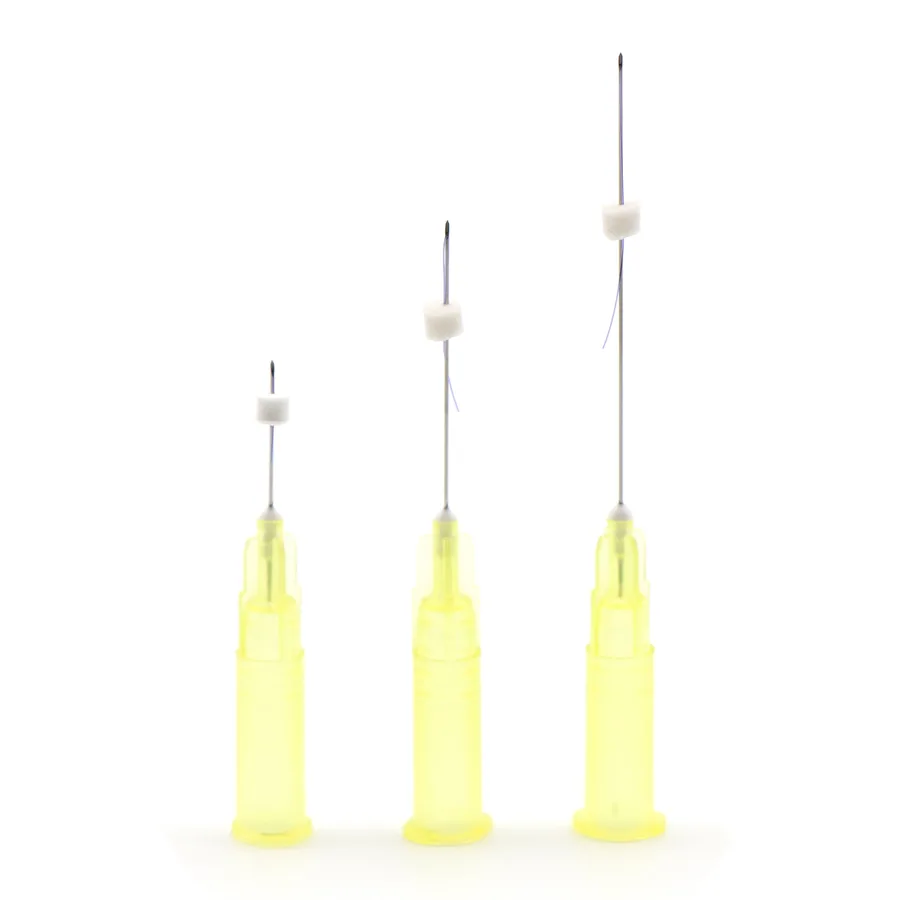
Mono
PDO / PCLSmooth, diffuse support
The basic smooth thread, used broadly across face and body where structural support and skin quality, rather than a lift vector: are the objective.
- Geometry
- smooth monofilament
- Gauges
- 25G, 26G, 27G, 29G, 30G
- Lengths
- 12 mm to 120 mm
- Pack
- 5 pcs/pouch, 25 pcs/foil bag
- Regulatory
- 510(k) documentation held by the manufacturer for the mono PDO line (absorbable-suture clearance)
Skin firming, collagen stimulation
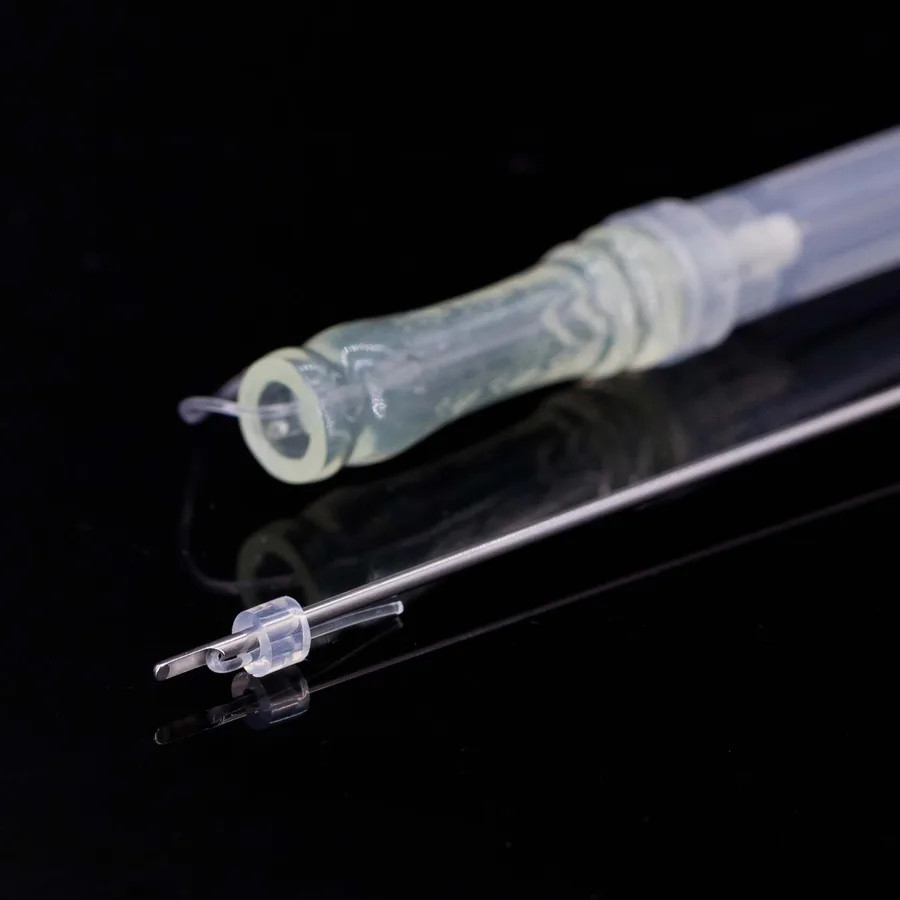
Cog
PDODirectional lift
Barbed threads that engage tissue to create a lift vector. The 4D and 6D barbed COG PDO lines are the ones carrying 510(k) documentation.
- Geometry
- barbed, 4D and 6D
- Gauges
- 18G, 19G and 21G, by cog variant
- Delivery
- L & W cannula
- Regulatory
- 510(k) documentation held by the manufacturer for the barbed COG PDO lines (absorbable-suture clearance; lifting is provider technique)
Lifting & repositioning, mid-face, jawline, brow
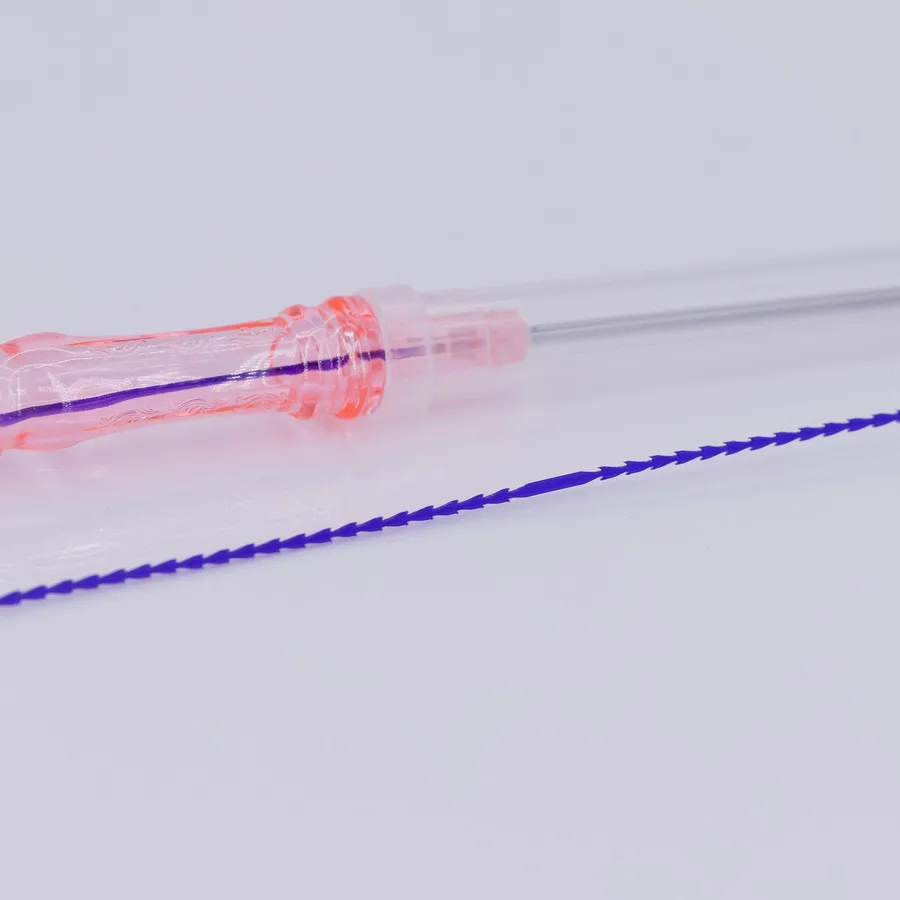
Fishbone cog
PDOMultidirectional lift
A stronger lifting geometry designed for multidirectional engagement where a single vector is not enough.
- Geometry
- fishbone barb pattern
- Gauges
- 18G and 19G
- Regulatory
- ask for the specific 510(k) letter covering the exact SKU
Enhanced grip, multidirectional lift
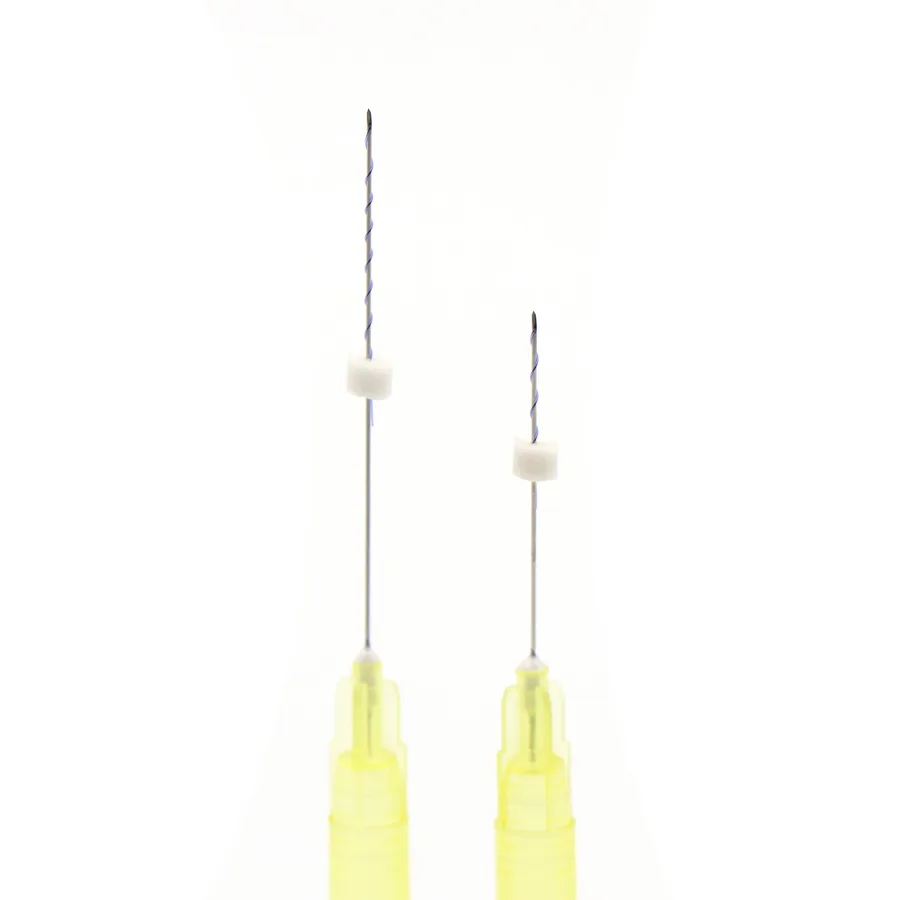
Screw
PDOVolume and elasticity
A dual-helical design, used where the objective is added volume and elasticity rather than a directional lift.
- Geometry
- dual-helical
- Gauges
- 25G, 26G, 27G, 29G, 30G
- Regulatory
- ask for the specific 510(k) letter covering the exact SKU
Volume, elasticity
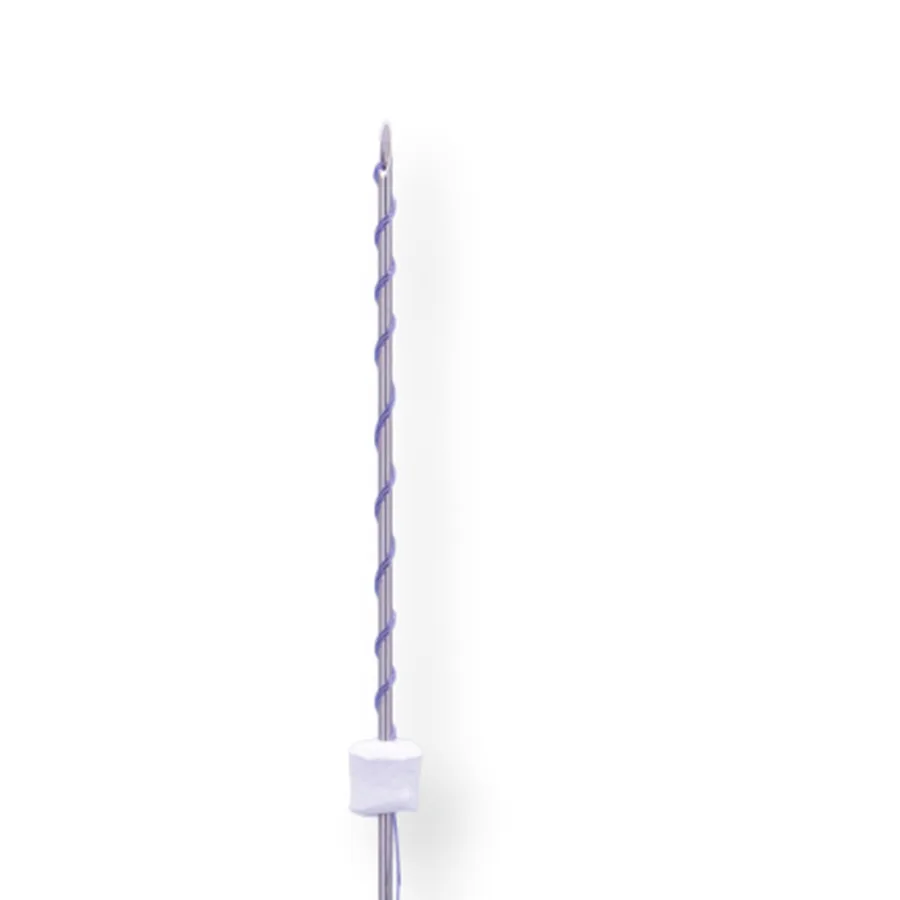
Twin Screw
PDO / PCLTwo filaments wound together
A twin-filament helical thread: the higher-volume relative of the single screw. Providers use it where more collagen volume is the objective rather than a directional lift.
- Construction
- twin-filament helical
- Gauges
- 25G, 26G
- USP
- 6-0 × 2
- Lengths
- 50 to 90 mm needle; 70 to 120 mm thread
- Pack
- 5 pcs/pouch, 25 pcs/foil bag
Volume, elasticity
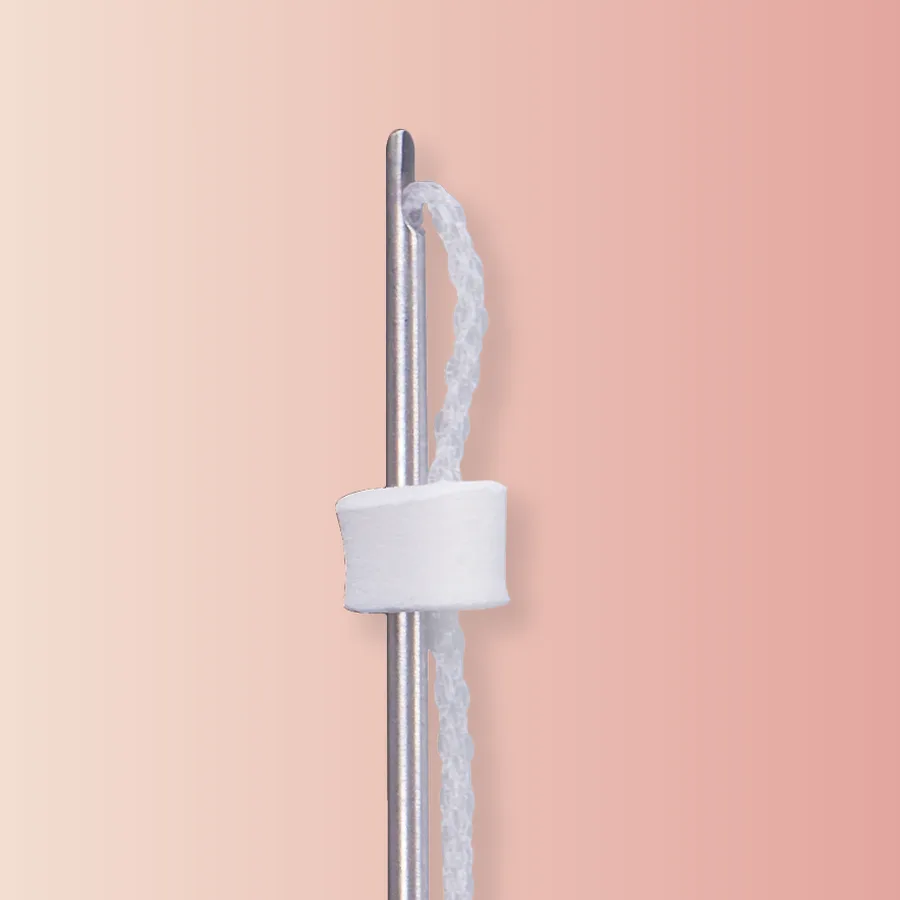
Mesh
PCLBraided construction for deeper folds
Eight PCL filaments braided into a single mesh thread, placed where a smooth mono would not hold structure. Providers use it in the nasolabial fold and other deeper folds.
- Construction
- 8-filament braided PCL
- Gauge
- 19G
- USP
- 5-0 × 8
- Lengths
- 38 mm and 60 mm needle; 50 mm and 70 mm thread
- Pack
- 2 pcs/pouch, 10 pcs/foil bag
- Regulatory
- regulatory documentation for the PCL line is under verification with the manufacturer
Nasolabial fold, deeper folds
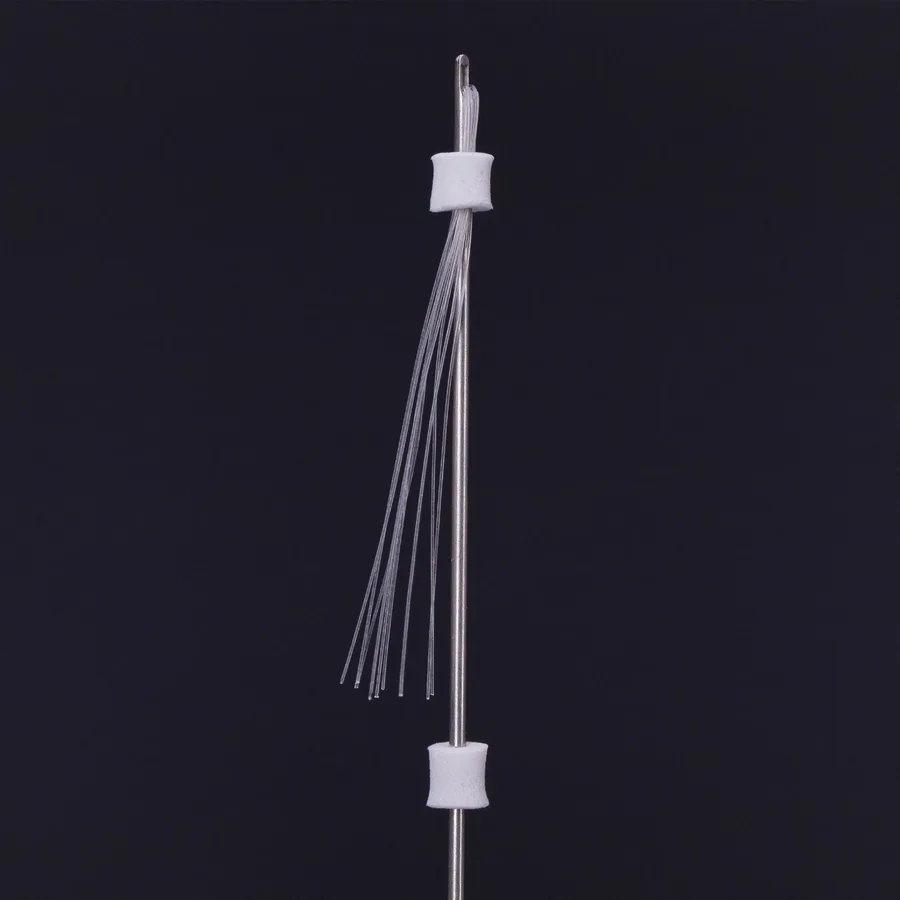
Multi
PDOMulti-filament lift and tone
Multi-filament construction placing more material per insertion for lift and tone.
- Construction
- multi-filament
- Gauges
- 19G, 21G and 23G
- Regulatory
- ask for the specific 510(k) letter covering the exact SKU
Volumizing support, lift and tone
Eye
PDOPeriocular fine work
The finest gauges in the range, for fine lines and the delicate periocular area where standard gauges are too coarse.
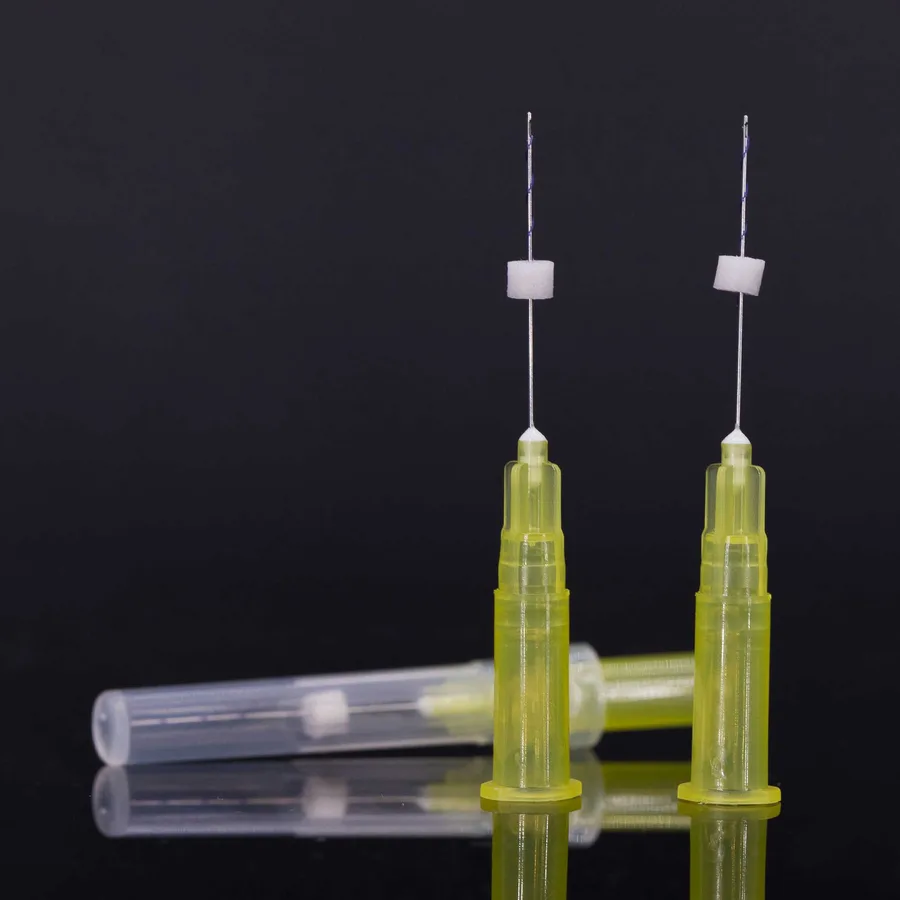
- Gauge
- 30G
- Lengths
- 12 mm to 60 mm
- Regulatory
- ask for the specific 510(k) letter covering the exact SKU
Fine lines, delicate periorbital area
Needle types
sharp, L, WSharp, L-type and W-type needles
The delivery choice matters as much as the thread geometry, and the specific needle supplied varies by SKU.
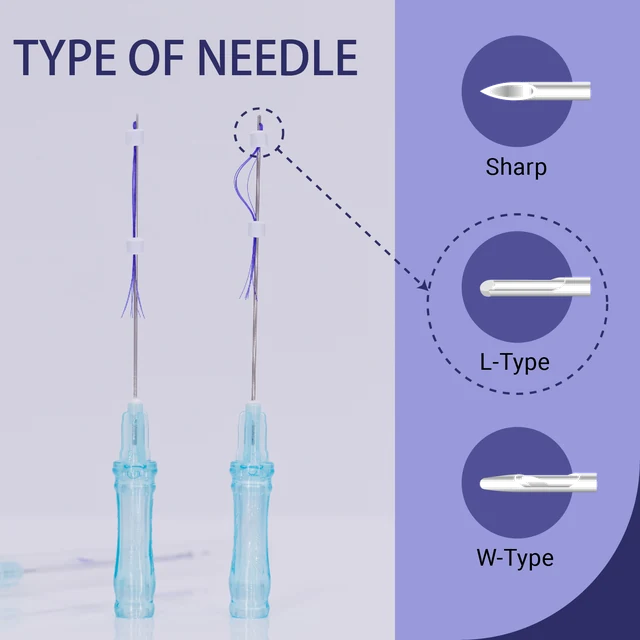
- Types
- sharp, L-type, W-type
- Gauges
- 18G to 30G
- Lengths
- 12 mm to 160 mm
Manufacturer product imagery
Cannula
L & WThe other half of the delivery choice
Threads in the barbed COG range are supplied on L and W cannulas rather than a sharp needle.
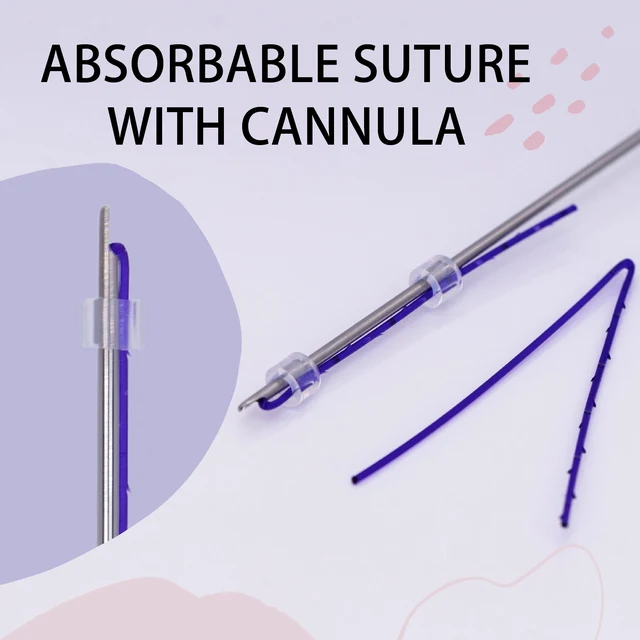
- Supplied
- absorbable suture with cannula
- Used on
- barbed COG 4D/6D, L & W
Manufacturer product imagery
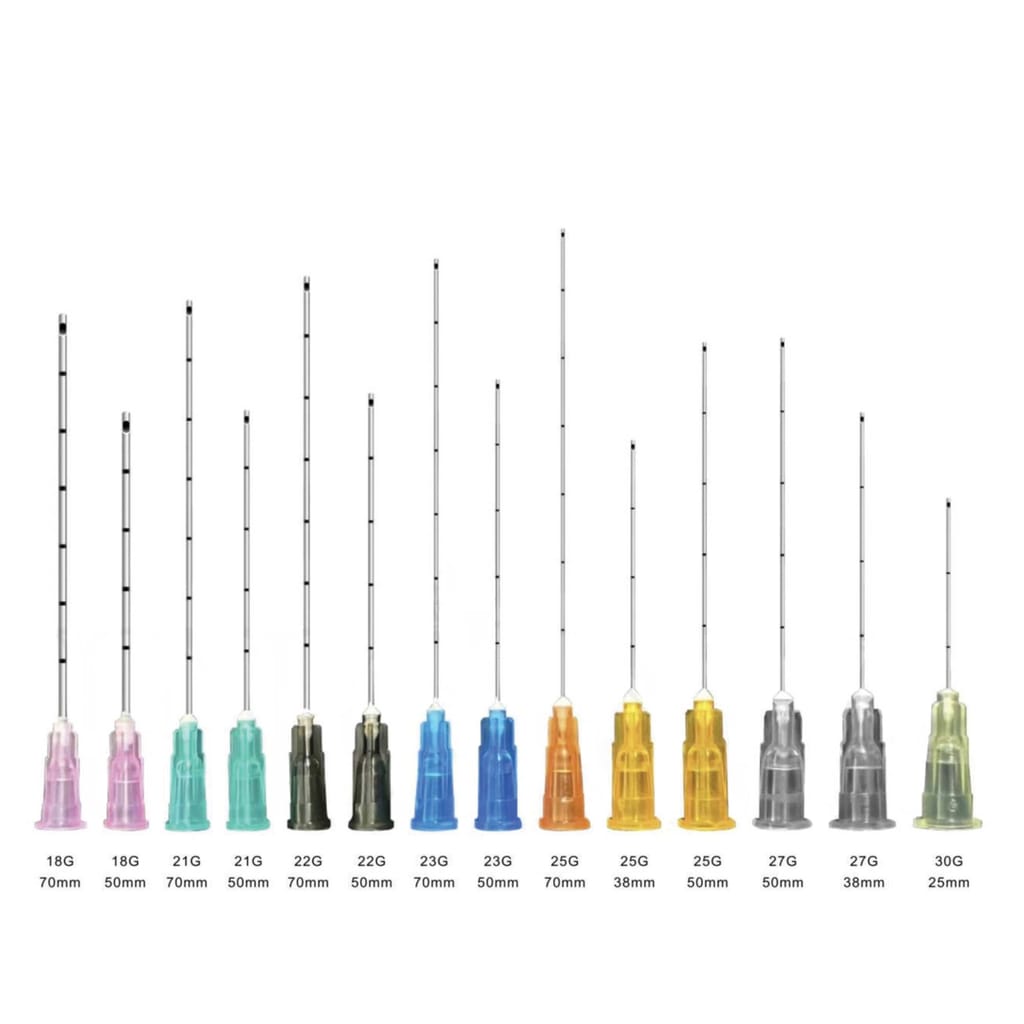
Manufacturer product imagery. Gauges run 18G to 30G with lengths from 12 mm to 160 mm; the specific needle supplied varies by SKU. 510(k) status is held by line, not by family: documentation is held for the MONO PDO line and for the barbed 4D and 6D COG PDO lines. Absorbable-suture clearances (soft-tissue approximation); lifting is provider technique. Regulatory documentation for the PCL line is under verification. Status is not uniform across every geometry and polymer in the catalog, so ask us for the specific 510(k) letter covering the exact SKU you plan to use before you advertise it.
What the range is, line by line
Absorbable PDO & PCL suspension sutures. Specifications are provided by the manufacturer. Treatment applications described reflect how licensed providers use the threads.
| Specification | Value |
|---|---|
| Materials and range | |
| Materials | PDO & longer-lasting PCL, gauges 18G to 30G |
| Range | Eight families across PDO and PCL, gauges 18G to 30G, lengths 12 mm to 160 mm |
| Thread families | |
| Mono | 25G, 26G, 27G, 29G, 30G 12 mm to 120 mm 5 pcs/pouch, 25 pcs/foil bag |
| Twin Screw | 25G, 26G USP 6-0 × 2 50 to 90 mm needle, 70 to 120 mm thread 5 pcs/pouch, 25 pcs/foil bag |
| Mesh | 19G USP 5-0 × 8 38 and 60 mm needle, 50 and 70 mm thread 2 pcs/pouch, 10 pcs/foil bag |
| Eye | 30G 12 mm to 60 mm |
| Delivery and what it takes to stock | |
| Delivery | Sharp, L-type and W-type needles, plus the cannula option; the specific needle supplied varies by SKU |
| Capital required | None. Threads are a consumable, not capital equipment. There is no device to finance and no install |
What an absorbable suture actually does in tissue
Threads work twice: mechanically on the day of placement, and biologically over the months that follow as the polymer hydrolyses.
- PDO: the faster-absorbing polymer
- Polydioxanone is the long-standing absorbable suture material in this category, hydrolysing over months. It is the workhorse polymer across the mono, cog, screw and multi ranges.
- PCL: the slower-absorbing polymer
- Polycaprolactone degrades more slowly than PDO, which is why it is offered as the longer-duration option in the same product families.
- Mechanical vector vs. diffuse support
- Barbed and cog geometries engage tissue to create a directional lift vector at placement. Smooth mono threads provide diffuse structural support rather than a vector: different tools, different jobs.
- The foreign-body response is the point
- Absorbable sutures provoke a controlled local tissue response as they degrade. The clinical rationale of the category rests on that response; how it presents varies by patient, polymer and technique.
Read the regulatory record by line, not by family
Each row below covers one line, with the documentation we supply for it, so you can match the letter to the exact SKU you intend to advertise.
| Source | What it says |
|---|---|
| MONO PDO Threads | FDA 510(k). 510(k) documentation held by the manufacturer for the mono PDO line: an absorbable-suture clearance (soft-tissue approximation). It covers the mono PDO line as an absorbable suture and nothing beyond it: not the barbed geometries, not the PCL versions of other families. A 510(k) is a clearance to market, not evidence of an outcome for any patient. |
| Barbed 4D / 6D COG PDO Threads | FDA 510(k). 510(k) documentation held by the manufacturer for the barbed COG PDO lines: absorbable-suture clearances (soft-tissue approximation). It covers the barbed COG PDO lines as absorbable sutures; lifting and repositioning reflect provider technique beyond the cleared indication. It says nothing about the fishbone, screw, multi or eye geometries, and nothing about how long a lift lasts. |
| PCL Threads | Under verification. Regulatory documentation for the PCL line is being confirmed with the manufacturer; no clearance is stated here until it is. The mono and barbed COG PDO lines remain the documented lines. Until that documentation is confirmed, nothing on the PCL line should be advertised as cleared. |
| Category rationale | Absorbable sutures provoke a controlled local tissue response as they degrade; the clinical rationale of the category rests on that response. No result is claimed here for anyone. |
Threads are a consumable, not capital equipment: there is no device to finance and no install. Clearance status varies by SKU: we will supply the specific regulatory documentation for whatever you order. Thread lifting technique, patient selection and outcome remain entirely the clinical responsibility of the licensed provider placing them.
Threads earn their keep per treatment, not per device
What matters is technique, steady supply, and pack pricing that holds up order after order: handled by the same team that sources your pharmacy and biologics.
with threads there is no device to finance, so the technique training is the whole handoff.
- Pack pricing
- Threads are priced per pack, not as capital equipment: typically packaged 5 pieces per pouch and 25 pieces per foil bag, with pricing varying by geometry and gauge. Because there is no device to buy, this is the lowest-capital way to add a lift line, and we quote current pack pricing on request.
- Per-pack economics
- No lease, no financing, no idle capital. Threads are bought like any other consumable: priced per pack, quoted provider-to-provider, and scaled to the treatments you actually book. If you are also weighing an energy device for your menu, that is a separate decision: read Buy vs. lease your first laser.
- Nothing to commission
- No device and no downtime for setup. The range slots into an existing injectable practice from the first order, and orders ship straight to your practice.
- Clinical technique training
- Clinical training on thread technique is arranged with your order so staff can add the service confidently, with one point of contact throughout. Hands-on protocols and KOL-backed education for your staff.
- Product terms and support
- As a consumable, Platinum Threads carry the manufacturer's product terms rather than a device warranty: current terms are included with every quote. Eventide remains your single point of contact for reorders and support, alongside the same team that handles your other supply lines.
- Restock without friction
- Standardized pack sizes (5 pcs/pouch and 25 pcs/foil bag on most lines) and reorders through the same point of contact as your other supply lines.
- Who makes it, who sells it
- Platinum Threads is manufactured by Platinum Threads USA. Eventide Aesthetics & Wellness is a United States distributor supplying it to licensed providers and practice owners: we handle pack pricing, ordering, and clinical technique training, and we stay your point of contact for every reorder.
- Who it is sold to
- This is a business-to-business page. Platinum Threads is sold to licensed medical providers and the practices they operate, not to consumers, and nothing here is directed at patients. We support clinics in all 50 US states.
What buyers ask about Platinum Threads
Is financing available for Platinum Threads?
No financing is needed: threads are a consumable, not capital equipment. There is no lease and no device payment: you buy packs as you book treatments, at pricing shared provider-to-provider with verified, licensed providers. If you are also weighing an energy device for your menu, our guide Buy vs. lease your first laser covers that separate decision.
Are training and installation included?
Platinum Threads are a consumable line: no capital equipment, site prep, or installation required. Clinical training on thread technique is arranged with your order so staff can add the service confidently, with one point of contact throughout.
What about warranty and support?
As a consumable, Platinum Threads carry the manufacturer's product terms rather than a device warranty: current terms are included with every quote. Eventide remains your single point of contact for reorders and support, alongside the same team that handles your other supply lines.
What is Platinum Threads' regulatory status?
Platinum Threads' mono and barbed COG PDO lines carry FDA 510(k) clearances held by the manufacturer for the underlying absorbable sutures: soft-tissue approximation where an absorbable suture is appropriate. Lifting and repositioning applications reflect provider technique beyond that cleared indication. Regulatory documentation for the PCL line is under verification with the manufacturer; ask us for the documentation covering the exact SKU before purchase.
How much do Platinum Threads cost?
Threads are priced per pack, not as capital equipment: typically packaged 5 pieces per pouch and 25 pieces per foil bag, with pricing varying by geometry and gauge. Because there is no device to buy, this is the lowest-capital way to add a lift line, and we quote current pack pricing on request.
What is the difference between PDO and PCL threads?
Both are absorbable polymers; the difference is time. Polydioxanone (PDO) hydrolyses faster and is the workhorse across the range. Polycaprolactone (PCL) degrades more slowly and is offered where a longer-duration option is wanted.
Which Platinum Threads are FDA-cleared?
The manufacturer holds 510(k) documentation for the MONO PDO line and for the barbed 4D and 6D COG PDO lines: absorbable-suture clearances for soft-tissue approximation; lifting and repositioning reflect provider technique beyond that indication. Regulatory documentation for the PCL line is under verification. Status is not uniform across every geometry and polymer in the catalog, so ask us for the specific 510(k) letter covering the exact SKU you plan to use before you advertise it.
Who distributes Platinum Threads in the United States?
Eventide Aesthetics & Wellness distributes Platinum Threads to licensed providers and practice owners across all 50 US states. Platinum Threads is manufactured by Platinum Threads USA; Eventide is a distributor, not the manufacturer, and handles pack pricing, ordering, clinical technique training and ongoing reorder support.
How do I buy Platinum Threads for my clinic?
Start with a 15 to 20 minute call. We scope your treatment menu and expected volumes, then send current pack pricing and spec sheets before you commit. There is no installation, after you order, threads ship to your practice and clinical technique training is arranged for your staff. Call 813-544-7131 or email justin@eventideaw.com.
Specifications and regulatory status reviewed 24 July 2026 by Justin Messner, Co-Founder, Eventide Aesthetics & Wellness.
Important information for providers. 510(k) documentation is held by the manufacturer for the mono and barbed COG PDO lines: absorbable-suture clearances (soft-tissue approximation); regulatory documentation for the PCL line is under verification. Treatment applications described reflect how licensed providers use the threads, not cleared indications. Eventide Aesthetics & Wellness is a distributor, not a manufacturer. Product specifications are provided by the manufacturer. No treatment outcome is claimed or guaranteed. For licensed medical providers.